
Freestanding Tubs in Luxury Bathrooms: Design Strategy for Custom Homes | Apex Homes Florida

Updated: Mar 11
In many of today’s luxury custom homes, the primary bathroom has evolved far beyond simple functionality. It has become a space of retreat — a place designed to feel calm, refined, and restorative.
One of the most recognizable elements of this shift toward spa-inspired living is the freestanding bathtub. More than just a fixture, a freestanding tub often becomes the architectural focal point of the entire bathroom, bringing together design, proportion, and craftsmanship.
At Apex Homes Florida, we frequently incorporate freestanding tubs into the homes we build throughout Jacksonville, Ponte Vedra Beach, Jacksonville Beach, and across Northeast Florida. When thoughtfully integrated into the design process, they create a sense of openness, elegance, and quiet luxury that homeowners truly appreciate.
But like many features in custom homebuilding, their success depends on planning, placement, and the coordination of multiple building systems long before construction begins.
Why Freestanding Tubs Have Become a Signature Feature of Luxury Homes
Luxury homes today are increasingly designed around experience and atmosphere, not simply square footage. Bathrooms are expected to feel spacious, tranquil, and thoughtfully designed.
Freestanding tubs help achieve this by creating:
• Visual balance within the room
• A sculptural design element
• A sense of openness compared to traditional alcove tubs
Unlike built-in tubs that are enclosed within walls or platforms, freestanding tubs allow the surrounding space to remain visually open. This creates a lighter, more architectural look that pairs beautifully with features like large windows, natural light, and walk-in showers.
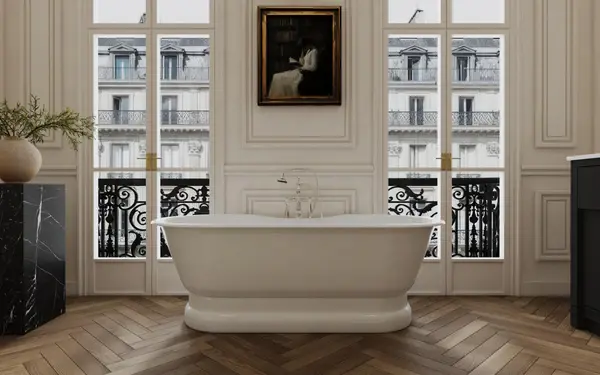
In many of the luxury homes we build in coastal communities such as Ponte Vedra Beach or Fernandina Beach, homeowners enjoy positioning the tub where it can take advantage of natural views, sunlight, or thoughtful symmetry within the bathroom layout.
Freestanding Tubs vs. Built-In Tubs in Custom Home Design
While freestanding tubs offer a distinctive aesthetic, they also introduce important design and construction considerations.
Traditional built-in tubs are typically framed into a platform or alcove and surrounded by tile or stone. Freestanding tubs, on the other hand, stand independently within the space, which changes how plumbing and layout must be planned.
During the design-build process we carefully coordinate:
• Floor plumbing placement before the slab is poured
• Tub filler location and water supply lines
• Weight distribution depending on tub material
• Access for future maintenance if required

Because these elements are integrated into the structure of the home, they must be addressed early in the design phase rather than after construction begins. This level of coordination is one reason many homeowners appreciate working with a design-build builder who manages the planning and construction together.
Placement Strategies for Freestanding Tubs
One of the greatest advantages of freestanding tubs is the flexibility they provide in bathroom layout. When positioned thoughtfully, they help create a sense of symmetry and calm within the space.
Some of the most common placement strategies include:
Centered Beneath Windows
Positioning the tub beneath a large window allows natural light to highlight the shape of the tub while maintaining privacy with carefully selected glazing or landscaping.
Anchoring the Bathroom Layout
In larger bathrooms, the tub can act as the visual anchor of the space, with vanities, showers, and lighting arranged symmetrically around it.
Adjacent to Walk-Through Showers
In some modern layouts, the tub and shower share an open spa-style environment, creating a seamless bathing experience.
Highlighting Views
In waterfront homes or homes with mature trees or landscaped gardens, positioning the tub toward a view can dramatically enhance the feeling of relaxation within the room.
This level of coordination is part of our custom home building process.
Choosing the Right Material
Freestanding tubs are available in a wide range of materials, each offering different benefits in durability, weight, and appearance.
Some of the most popular options in luxury homes include:
Stone Resin
Stone composite tubs have become increasingly popular because they offer the appearance of natural stone while remaining relatively lightweight and durable.
Cast Iron
Cast iron tubs are extremely durable and retain heat well, though their weight requires careful planning in the structural design.
Acrylic
Acrylic tubs remain one of the most common choices due to their affordability, ease of installation, and variety of shapes.
Copper or Metal Finishes
In certain architectural styles, particularly Mediterranean or transitional homes, copper tubs can create a dramatic statement piece within the bathroom.

Selecting the right material involves balancing aesthetics, maintenance considerations, and long-term durability.
Freestanding Tubs in Coastal Florida Homes
Homes in Northeast Florida often feature larger primary bathrooms designed to reflect the relaxed coastal lifestyle of the region. Freestanding tubs fit naturally into this environment because they pair well with:
• Natural light
• Neutral material palettes
• Clean architectural lines
• Indoor-outdoor visual connections
However, designing bathrooms in coastal environments also requires attention to humidity control, ventilation, and durable materials. Proper mechanical systems and thoughtful design details ensure that the bathroom remains beautiful and functional for decades to come.
View examples of spa-inspired custom homes in our portfolio.
Builder Perspective: What Homeowners Often Overlook
One of the most important aspects of incorporating a freestanding tub is the coordination that happens behind the scenes during pre-construction planning.
Some of the details that are easy to overlook include:
• The precise location of the floor drain and plumbing lines
• The positioning of the tub filler to allow comfortable use
• Lighting placement to highlight the tub without creating glare
• Flooring transitions and waterproofing around the tub area
These details may seem small individually, but together they determine whether the finished space feels effortless and refined.
At Apex Homes Florida, our approach is to coordinate these elements during the design-build planning stage, allowing the bathroom to function beautifully while maintaining the architectural intent of the space.
Designing Bathrooms That Stand the Test of Time
Trends in home design will always evolve, but certain elements endure because they are grounded in thoughtful design and craftsmanship. Freestanding tubs have remained popular for many years because they combine timeless form with modern functionality.
When integrated into a well-planned custom home, they become more than just a feature — they become a defining element of the space.
For homeowners building a custom home in Jacksonville, Ponte Vedra Beach, St. Augustine, or surrounding Northeast Florida communities, the goal is always the same: creating spaces that feel both beautiful and enduring.
Bathrooms are no exception.
Frequently Asked Questions About Freestanding Tubs
Are freestanding tubs practical for everyday use?
Yes. While many homeowners associate freestanding tubs with relaxation, they can function just as well as traditional tubs when properly integrated into the bathroom layout.
How much space do you need for a freestanding tub?
Ideally, a bathroom should provide at least 12–18 inches of clearance around the tub to allow comfortable movement and proper cleaning access.
Are freestanding tubs harder to clean?
Not necessarily. With adequate spacing around the tub and proper flooring materials, maintenance is typically straightforward.
Do freestanding tubs require special plumbing?
Freestanding tubs usually require floor-mounted plumbing and a floor-mounted tub filler, which must be coordinated before construction begins.
Are freestanding tubs suitable for smaller bathrooms?
They can work in smaller spaces, but they are most commonly used in larger primary bathrooms where they can serve as a design focal point.
Looking for Visual Inspiration?
Many homeowners prefer to browse design ideas visually before finalizing their plans. We curate inspiration for luxury coastal architecture, outdoor living spaces, kitchens, bathrooms, and custom home planning on our Pinterest boards.
Explore our design inspiration here →Pinterest.com/ApexHomesFlorida
Planning a Custom Home in Northeast Florida
Designing a luxury home is about far more than selecting finishes or fixtures. It requires thoughtful planning, coordination, and a clear understanding of how every element of the home will work together.
If you're considering building a custom home in Jacksonville, Ponte Vedra Beach, St. Johns County, or anywhere across Northeast Florida, thoughtful design decisions made early in the process can make a significant difference in the final result.
Written by Tim Calderala, Licensed Florida Contractor (CRC #1335511), Owner of Apex Homes Florida.
Designed for Life. Built with Intention.


Comments